Marketo's co-founder launches Phave, an AI marketing platform priced by reach, not database size
Jon Miller, who co-founded Marketo, has launched Phave, an AI-native marketing automation platform that reasons instead of running on pre-written rules, starting at $36,000 a year.
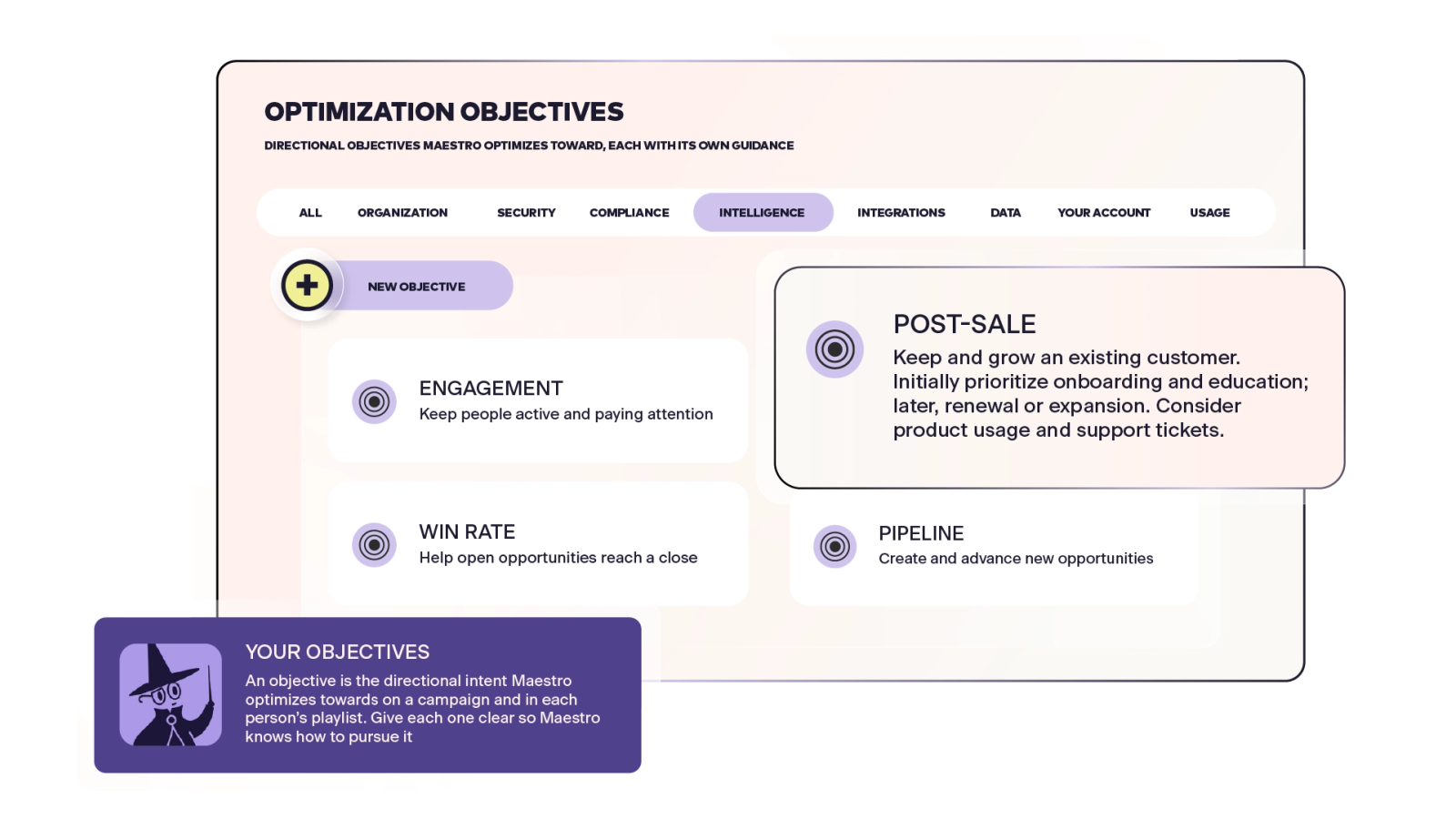
Marketo's co-founder has launched a marketing automation platform built to run without rule trees, arguing that the category he helped create in the 2000s can no longer handle how B2B buying actually works. Jon Miller came out of stealth on September 23 with Phave, co-founded with Nick Bonfiglio, formerly EVP of Global Product at Marketo. The company spent two years in stealth, reached general availability in August, and now runs marketing operations for ten enterprise customers, five of which the company named: SambaNova, SPS Commerce, mabl, Servion Global Solutions and Hypha.
What changed
Every legacy marketing automation platform, Miller argues, is a pile of rules someone wrote in advance: what counts as a marketing-qualified lead, which segment a contact belongs to, which email fires next. Phave replaces that decision layer with an AI engine called Maestro, which computes a "Playlist" of touches for each contact, ordered and timed to hit an objective the marketer sets, rather than a sequence a specialist configured by hand.
The pitch is specific about where the line falls.
"Rules are good at what is allowed, but bad at deciding what is best," said Jon Miller, co-founder and CEO of Phave.
Consent, send frequency and quiet hours stay as hard rules. Choosing which of two reasonable emails a given person should get next becomes a judgment call the model makes instead.
Phave also changes what the system tracks. Accounts and buying groups are stored as their own records, each with a score and a lifecycle stage, so one account can hold a prospect-stage buying group in one department and a customer-stage group in another at the same time. That's a structural change from platforms built around a single lead or contact record, and it's aimed squarely at the complex, multi-stakeholder deals that make up most enterprise software sales.
The company also published a competitive scorecard built from 481 requirements drawn out of twelve enterprise evaluations. On Phave's own numbers, Marketo lands lowest at 2.38, HubSpot comes in just ahead at 2.46, and Phave rates itself highest at 2.97. An AI model, not a Phave employee, did the actual weighting and scoring, and the company has posted its methodology publicly — but this is still a vendor grading its own homework against criteria nobody outside Phave chose, not an independent analyst benchmark, and it should be read that way.
Who it affects
The direct target is any B2B software company running Marketo, Pardot, Eloqua or HubSpot for account-based, multi-buyer sales — which is most enterprise and mid-market SaaS marketing teams. Bruce Eidsvik, chief growth officer at Servion Global Solutions, described exactly the workaround his old stack forced onto his team.
"With a traditional platform, going after a single account with four global sites and buyers across IT, finance and service operations is practically impossible," said Bruce Eidsvik, Chief Growth Officer, Servion Global Solutions.
That's the case Phave is built to win: not the classic funnel with one lead record per contact, but a named account where several buying groups are moving at once, some still evaluating and some already renewing.
It also matters to marketers who aren't switching platforms this quarter. A Marketo co-founder publicly staking his second act on "legacy platforms stopped innovating years ago" is a pointed signal to incumbents' customers that the category is being re-litigated, and it gives procurement teams a fresh reference point the next time a renewal negotiation comes up.
What a software marketer should do
- If your team runs three or fewer nurture tracks per segment, ask whether that's a strategic choice or a ceiling your platform's rule engine imposes.
- Map how your current MAP treats a single account with multiple buying committees — if it forces you to pick one lead record per account, you're already working around the limitation Phave is selling against.
- Treat that scorecard as a marketing claim, not evidence: the requirements, the weighting and the win are all controlled by the vendor doing the announcing, and the customer base behind it is still ten companies.
- Watch how Miller frames this publicly — he and MarTech industry analyst Scott Brinker are discussing the platform shift on September 29, which is a reasonable moment to see if the pitch survives outside a press release.
Before evaluating a switch, audit your own MQL and segmentation rules for cases where a human is quietly overriding the system already — that's the exact gap AI-reasoning platforms like Phave are pricing themselves against, and knowing your own workaround count tells you whether the pitch applies to you.
Pricing starts at $36,000 a year, scaled to how many people actually get a touch in a given month instead of how large the contact database is — a shift that rewards teams sending fewer, better-targeted messages over teams paying for list size. With ten customers and two years of stealth behind it, Phave is still an early bet rather than a proven replacement for Marketo or HubSpot at scale. But the argument it's making — that rule-based automation caps how personalized B2B outreach can get — is one every software marketer running a legacy platform will hear from a vendor or a board member eventually. Better to have an answer ready before that conversation happens by accident.
 Positioning
Martech category labels have stopped describing products, and a blind test shows buyers can't tell CRMs apart
Sienna Mcpherson · 4 min read Search
Google adds AI Max reporting, two years after advertisers called it a black box
Sienna Mcpherson · 4 min read Tools & Analytics